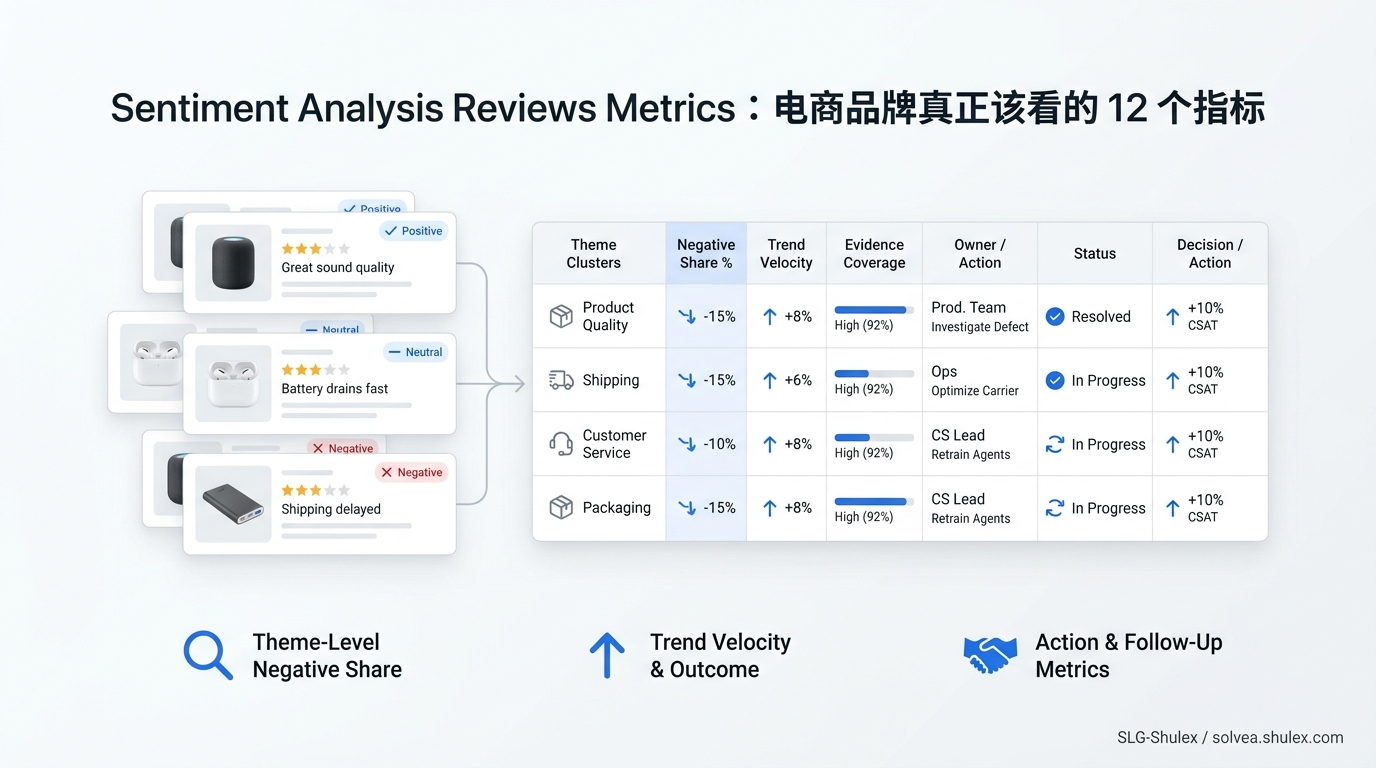
大多数团队开始做 sentiment analysis reviews 时,会先问一个看似合理的问题:我们的评论里正面、负面、中性各占多少?
这个问题有用,但不够。对 Amazon 品牌、Shopify 店铺和代理商来说,评论情绪分析真正影响业务的地方,不是负面评论占比本身,而是它能不能回答这些更具体的问题:
- 哪个 SKU、variant 或渠道的负面情绪正在变严重?
- 负面情绪集中在产品质量、尺码、包装、物流、安装说明,还是 listing 承诺过高?
- 这个主题有多少原始 review 证据支撑?
- 谁负责处理,改完之后看什么 follow-up metric?
所以,sentiment analysis reviews metrics 不应该停在 sentiment score 或 pie chart。它应该是一套从 review text 到 theme、evidence、owner、action、post-fix result 的运营指标。
这篇文章给一套电商品牌可以直接使用的 12 个指标。它适合三类读者:正在诊断 rating drop 的 Amazon brand manager;要把 reviews、support tickets、returns 连起来看的 ecommerce team;以及需要给客户交付 VOC report 的 Amazon agency。
Sentiment Analysis Reviews 先定义清楚:指标服务于决策,不服务于图表
Sentiment analysis 通常用于判断文本表达的是 positive、negative、neutral 或 mixed 情绪。IBM、AWS Comprehend 和 Google Cloud Natural Language 都把它作为文本分析中的基础能力;AWS 还提供 targeted sentiment,用来识别文本中与特定实体相关的情绪。
但 customer reviews 比普通文本更复杂。一条 review 可能同时包含多个方面:
"The material feels premium, but the size runs small and the setup guide is confusing."
如果工具只给整条评论打一个 "mixed" 标签,团队还是不知道该做什么。更好的 sentiment analysis reviews 工作流会把这条 review 拆成至少三个对象:
| Review object | Sentiment | 决策含义 |
|---|---|---|
| material quality | positive | 可以保留在 listing 和 A+ content 里 |
| size accuracy | negative | 检查 size chart、variant copy 和 return reason |
| setup guide | negative | 更新 FAQ、macro、knowledge base 或安装说明 |
这就是本文的核心判断:评论情绪指标只有在连接到 theme、segment、evidence、owner 和 follow-up metric 时,才值得进入周报或采购评估。
如果你还在比较工具能力,可以先看 sentiment analysis reviews tools 评估框架。本文不重复工具 scorecard,而是专门回答:工具上线后到底该看哪些指标。
12 个真正值得看的 Sentiment Analysis Reviews Metrics
下面这 12 个指标按四层组织:输入健康度、理解质量、决策优先级、闭环结果。不要一次性追求全部自动化,先把每个指标的定义和 owner 讲清楚。
| 层级 | 指标 | 它回答的问题 |
|---|---|---|
| 输入健康度 | 1. Review coverage rate | 我们到底分析了多少可用 review? |
| 输入健康度 | 2. Segment completeness | SKU、variant、channel、date 字段是否完整? |
| 输入健康度 | 3. Data freshness | 最近评论是否及时进入分析? |
| 理解质量 | 4. Theme coverage rate | 评论是否被归入有意义的 theme? |
| 理解质量 | 5. Aspect sentiment accuracy | theme 级情绪是否经得起人工抽查? |
| 理解质量 | 6. Evidence coverage | 每个结论是否有原始 review 证据? |
| 决策优先级 | 7. Theme-level negative share | 负面情绪集中在哪些具体主题? |
| 决策优先级 | 8. Mixed sentiment split rate | 工具有没有拆开一条 review 里的多个方面? |
| 决策优先级 | 9. Trend velocity | 哪些负面主题正在加速? |
| 决策优先级 | 10. Impact-weighted priority score | 哪些问题值得先处理? |
| 闭环结果 | 11. Owner-action assignment rate | 洞察有没有变成具体行动? |
| 闭环结果 | 12. Post-fix sentiment delta | 改完之后,相关情绪有没有改善? |
1. Review coverage rate
定义: 已进入分析的有效 review 数量 / 目标时间范围内应分析的 review 数量。
很多 sentiment analysis reviews 项目失败,不是因为模型不够聪明,而是输入数据本身不完整。比如只上传 Amazon 最近 100 条 review,却忽略 Shopify、TikTok Shop comments、客服工单和退货原因,输出就只能代表一个渠道。
最低要求:
- 按渠道记录 review 数量。
- 排除无文本、重复、语言无法识别或明显无效的 review。
- 标清楚时间范围,例如最近 30 天、90 天或最近一次产品版本上线后。
这个指标适合数据 owner 或运营负责人看。它不是业务结果,但它决定了后面所有 sentiment analysis reviews metrics 是否可信。
2. Segment completeness
定义: 关键字段完整的 review 占比。
对 ecommerce reviews 来说,光有文本不够。你至少需要这些字段:
| 字段 | 为什么重要 |
|---|---|
| SKU / ASIN / variant | 防止一个型号的问题污染整条产品线 |
| channel | 区分 Amazon、Shopify、TikTok、support 的上下文 |
| review date | 判断问题是否在变严重 |
| rating | 对比星级和文本情绪是否一致 |
| review text | 保留原始证据 |
| language / country | 避免不同市场语言被混在一起解释 |
如果 segment completeness 很低,先修数据结构。否则你看到的 "negative sentiment increased" 可能只是某个 variant 的问题,或者只是某个渠道最近导入了更多评论。
3. Data freshness
定义: 新 review 从产生到进入 sentiment analysis reviews 工作流的延迟。
对 rating drop 或产品缺陷诊断来说,30 天后才看到问题通常太慢。你不一定需要实时系统,但要知道数据延迟。
建议用三个档位:
| Freshness | 适合场景 |
|---|---|
| 24-48 小时 | Hero ASIN、低星评论、退货上升、旺季活动 |
| 每周 | 常规产品健康度和 agency 客户周报 |
| 每月 | 品类复盘、roadmap 输入、listing refresh |
这个指标的目标不是追求实时,而是让团队知道:当前结论是今天的信号,还是上个月的信号。
理解质量:不要让 AI 摘要看起来很对,实际不可用
4. Theme coverage rate
定义: 被归入有效 theme 的 review 占比。
有效 theme 不是 "positive feedback" 或 "bad product"。对 ecommerce 团队来说,theme 应该能对应行动,例如:
- product quality
- sizing / fit / compatibility
- packaging damage
- shipping expectation
- setup and instructions
- listing promise vs. reality
- customer support experience
- returns / refunds / warranty
- price-value perception
- competitor comparison
Theme coverage rate 太低,说明 taxonomy 不贴近业务;太高但 theme 很泛,说明工具只是把 review 硬塞进大类。好的 sentiment analysis reviews 输出应该让产品、content、support、operations 都能看懂自己要处理什么。
如果你需要从 review theme 延伸到产品决策,可以参考 product feedback analysis guide。
5. Aspect sentiment accuracy
定义: 人工抽查中,theme 级 sentiment 判断正确的比例。
不要只抽查整条 review 的 overall sentiment。真正要抽查的是 aspect sentiment:
| Review 片段 | 低价值判断 | 高价值判断 |
|---|---|---|
| "Great camera, painful app setup" | mixed | camera positive;app setup negative |
| "Box arrived crushed, product works fine" | negative | packaging negative;product function neutral/positive |
| "Runs small but fabric is nice" | mixed | sizing negative;material positive |
建议每周抽查 30-50 条关键 review,尤其是 mixed、低星高字数、近期新增主题和高影响 theme。这个指标能防止团队盲信 AI 摘要。
6. Evidence coverage
定义: 每个重要结论是否带有原始 review 样本、样本量、筛选条件和时间范围。
没有证据链的 sentiment analysis reviews 报告很难推动行动。产品经理会问原话是什么,客服负责人会问是不是误解了客户,老板会问这是 3 条评论还是 300 条评论。
每个重要 theme 至少要带这些字段:
| 字段 | 作用 |
|---|---|
| sample size | 避免被个案误导 |
| evidence examples | 让团队验证模型是否理解正确 |
| source filter | 标清楚 channel、SKU、date、rating |
| confidence note | 标记样本少、语言含混、需要人工复核的地方 |
Evidence coverage 是从 "AI summary" 走向 "可进入会议的判断" 的分界线。
决策优先级:真正的 Sentiment Analysis Reviews Metrics 在这里产生业务价值
7. Theme-level negative share
定义: 某个 theme 中 negative 或 mixed-negative review 的占比。
Overall negative share 只能告诉你情绪变差了。Theme-level negative share 才能告诉你问题在哪里。
举例:
| Theme | Mentions | Negative share | 可能 owner |
|---|---|---|---|
| sizing accuracy | 84 | 71% | Content + product |
| setup instructions | 53 | 58% | Support |
| packaging damage | 31 | 77% | Operations |
| price-value | 26 | 42% | Product marketing |
这个指标比 "总负面情绪 28%" 更有用,因为它天然对应 owner 和 action。
8. Mixed sentiment split rate
定义: 被拆成多个 aspect 的 mixed review 占 mixed review 总数的比例。
很多评论不是纯好评或差评。Mixed sentiment split rate 能衡量工具有没有把 review 里的不同对象拆开。如果这个比例过低,你的系统可能在丢失最有价值的信息。
为什么 mixed review 重要?因为它经常告诉你 "产品有价值,但某个环节拉低体验":
- 产品好,但安装难。
- 材质好,但尺码偏小。
- 功能好,但包装差。
- 客服响应快,但政策说明不清楚。
这类 review 最适合做转化优化和 support automation。它不是简单的差评,而是改动成本相对明确的机会。
9. Trend velocity
定义: 某个 theme 的负面提及在最近周期相对前一周期的增长速度。
静态 sentiment score 很容易误导。一个长期存在但没有增长的投诉,和一个最近 14 天突然出现的投诉,不应该被同等处理。
简化公式:
Trend velocity = 最近 30 天 theme negative mentions / 前 90 天月均 theme negative mentions
你也可以按业务节奏改成 7 天、14 天或 60 天。重点是看变化,而不是只看总量。
当 Amazon rating 下降时,可以把 trend velocity 和 Amazon review analysis workflow 结合起来:先找增长最快的 negative themes,再回到原始 reviews 验证原因。
10. Impact-weighted priority score
定义: 用 review volume、negative share、trend velocity、business impact 和 confidence 给 theme 排优先级。
一个实用版本:
Priority score =
review volume x negative share x trend velocity x business impact x confidence
字段解释:
| 字段 | 评分建议 |
|---|---|
| review volume | 样本越多,权重越高 |
| negative share | 负面占比越高,权重越高 |
| trend velocity | 最近增长越快,权重越高 |
| business impact | 影响 conversion、rating、returns、support cost 的问题权重更高 |
| confidence | 证据清楚、样本足够、人工抽查通过则更高 |
这个分数不需要伪装成科学模型。它的价值是帮团队少追逐一条情绪强烈的个案,多处理反复出现、正在增长、影响业务的主题。
闭环结果:看行动,而不是只看分析
11. Owner-action assignment rate
定义: 重要 theme 中已经指定 owner、next action 和 follow-up metric 的比例。
这是最容易被忽略的 sentiment analysis reviews 指标。一个 report 如果没有 owner,就只是另一个 dashboard。
建议输出格式:
| Theme | Sentiment pattern | Evidence | Owner | Next action | Follow-up metric |
|---|---|---|---|---|---|
| sizing accuracy | Negative rising | 多条 review 提到 runs small | Content + product | 更新 size chart,检查 variant copy | sizing 负面占比、return reason |
| setup instructions | Mixed frequent | 用户喜欢产品但卡在第一步 | Support | 新增 setup macro 和 help article | setup ticket volume |
| packaging damage | Negative stable | 包装压坏但产品功能正常 | Operations | 检查包装和承运交接 | damage complaints、refund rate |
如果你的 review themes 已经开始变成客服工单,下一步应该把这些主题接入 taxonomy、macro、knowledge base 和人工升级规则。可以参考 ecommerce customer service ticket taxonomy。
12. Post-fix sentiment delta
定义: 团队采取行动后,同一 theme 的 sentiment、review volume 或 support signal 是否改善。
这是证明 sentiment analysis reviews 有业务价值的关键指标。比如:
- 更新 size chart 后,sizing negative share 是否下降?
- 新增 setup guide 后,setup 相关 support tickets 是否减少?
- 改包装后,packaging damage mentions 是否下降?
- 修改 listing claim 后,listing mismatch themes 是否减少?
不要只看发布动作本身。真正的闭环是 "theme detected -> action shipped -> same theme measured again"。
一张可复制的 Metrics Dashboard 模板
你可以把 12 个指标压缩成一张周报表:
| Metric | Current | Target | Owner | Decision |
|---|---|---|---|---|
| Review coverage rate | 86% | 95%+ | Ops | 补齐 Shopify reviews |
| Segment completeness | 78% | 90%+ | Data/Ops | 修复 variant 字段 |
| Data freshness | 5 days | 48h | Ops | Hero ASIN 改为每 48h |
| Theme coverage rate | 82% | 85%+ | VOC owner | 合并低价值泛 theme |
| Aspect sentiment accuracy | 88% | 90%+ | VOC owner | 抽查 mixed reviews |
| Evidence coverage | 74% | 95%+ | VOC owner | 每个 theme 补样本 |
| Theme-level negative share | sizing 71% | decline | Product/content | 优先处理 size chart |
| Mixed sentiment split rate | 43% | 70%+ | VOC owner | 优化 aspect taxonomy |
| Trend velocity | setup 2.4x | below 1.0x | Support | 新增 setup FAQ |
| Priority score | sizing #1 | reviewed weekly | GM/owner | 本周 action |
| Owner-action assignment rate | 62% | 90%+ | GM/agency lead | 周会分配 owner |
| Post-fix sentiment delta | pending | negative down | Each owner | 30 天后复盘 |
这个 dashboard 的重点不是漂亮,而是让每个 theme 有归属、有证据、有下一步。
什么时候不要看这些指标
Sentiment analysis reviews metrics 也有边界。以下情况不要过度自动化:
- 近期 review 太少,无法形成模式。
- Review 文本太短,大多只有星级,没有可分析内容。
- 问题涉及安全、医疗、儿童用品、合规、保修或高风险产品声明。
- 模型无法理解品类术语、反讽、区域语言或特殊使用场景。
- 团队没有 owner 承接行动。
FTC 的 Consumer Reviews and Testimonials Rule 关注虚假评价、误导性评价、带条件的好评激励和 review suppression 等问题。运营上要守住一条线:用评论情绪分析发现问题、改善产品和服务,不要用它筛掉或压制不利反馈。
这不是法律意见。只要 review signal 会进入广告文案、公开展示、产品声明或客服承诺,就应该有人复核。
14 天落地流程:从指标到闭环
如果你现在要上线 sentiment analysis reviews 指标,不要从大而全 dashboard 开始。用 14 天完成一个小闭环。
| Day | 动作 | 验收标准 |
|---|---|---|
| 1 | 选一个真实问题 | 例如 hero ASIN rating drop、setup tickets 上升、variant 退货异常 |
| 2-3 | 导入 reviews 和必要字段 | 有 SKU、channel、date、rating、review text |
| 4 | 建立 theme taxonomy | 至少覆盖 8-12 个 ecommerce-relevant themes |
| 5-6 | 跑第一版 sentiment analysis reviews | 输出 theme-level sentiment,而不是只有 overall score |
| 7 | 人工抽查 aspect sentiment accuracy | 抽查 30-50 条 mixed 和高影响 reviews |
| 8 | 补 evidence coverage | 每个重要 theme 都能回到原始 review |
| 9 | 计算 trend velocity 和 priority score | 找出本周最该处理的 3 个 themes |
| 10 | 分配 owner、action、follow-up metric | Product、content、support、operations 至少各自知道是否相关 |
| 11-13 | 执行动作 | 更新 listing、FAQ、macro、packaging brief 或 support rule |
| 14 | 设置 post-fix sentiment delta 复盘 | 明确 30 天后看什么指标 |
如果你是代理商,这套流程也可以变成客户月报:不是交付 "本月负面情绪 28%",而是交付 "本月最值得处理的 3 个 review themes、证据、owner、建议动作和下月复盘指标"。
FAQ
Sentiment analysis reviews 最重要的指标是什么?
如果只能选一个,不要选 overall sentiment score。优先看 theme-level negative share 加 evidence coverage。前者告诉你问题集中在哪里,后者告诉你这个结论是否可信。
Sentiment score 和 review rating 有什么区别?
Rating 是客户给出的星级,sentiment score 是从文本里判断情绪。两者经常不一致。高星 review 可能包含负面细节,低星 review 也可能只是在抱怨物流。好的 sentiment analysis reviews 工作流会同时保留 rating 和 review text。
Aspect-level sentiment 为什么重要?
因为 ecommerce reviews 经常同时夸一个方面、骂另一个方面。Aspect-level sentiment 能把 "产品好但安装难" 拆成 product positive 和 setup negative,让团队知道具体该改什么。
这些指标能替代人工读评论吗?
不能。它们应该减少人工阅读的重复劳动,把最重要的 theme、证据和趋势推到前面。敏感、高影响或样本不足的判断仍然需要人工复核。
Solvea 在这个流程里适合做什么?
Solvea 更适合做 review-to-action 的闭环:把 reviews、support tickets、returns 和客服知识库放进同一套 theme、owner、action、follow-up metric 里,而不是只给一个情绪比例。对已经在看 customer feedback AI metrics 的团队,这篇可以作为 review sentiment 层的指标细化。
Bottom line
Sentiment analysis reviews 的价值不是告诉你客户开心还是不开心,而是告诉你哪个 theme 正在变糟、证据是否足够、谁要处理、改完之后有没有变好。
如果你的 dashboard 只有 positive、negative、neutral,它还没有进入决策层。把指标升级为 coverage、theme、aspect accuracy、evidence、trend velocity、priority、owner-action 和 post-fix delta,评论情绪分析才会真正影响 product、listing、support 和 agency report。
想把这些指标落到自己的 reviews、tickets 和 knowledge base 里,可以 预约一次 Solvea walkthrough。带一个正在下滑的 ASIN、一个近期投诉主题,或者一组客户 review,我们会一起把 sentiment analysis reviews workflow 拆成你团队能执行的指标表。
Sources
- IBM, What is sentiment analysis?
- AWS, Amazon Comprehend sentiment
- AWS, Targeted sentiment
- Google Cloud, Analyze sentiment
- eCFR, 16 CFR Part 465: Rule on the Use of Consumer Reviews and Testimonials
- Amazon, Product Opportunity Explorer
延伸阅读:了解 Shulex 按行业交付的 AI 客服解决方案,或查看 真实客户案例。